Zagor gets a bad reputation for being a big bad villain, even though he hasn't actually done anything to deserve that reputation.
I will be giving an alternative character interpretation of Zagor's actions from the source material.
Although the books describe Zagor as completely evil - and not even all of them do as the Warlock of Firetop Mountain does not state Zagor as being evil or doing evil deeds at all - it can be put down to propaganda from the so called Lawful side or people making snap judegements about powerful sorcerers who own their own mountains without looking for the details.
The writers of Titan obviously have no love for Zagor as well as Yaztromo and the people who try to slay him. These are the people who wrote or influenced the accounts of the three gamebooks - Warlock of Firetop Mountain, Return to Firetop Mountain and Legend of Zagor.
The account of Zagor in the Trolltooth wars was from Chadda Darkmane, who, although he is an officer in Salamonis, he is a man of his word and would not badmouth someone just because they have a bad reputation.
Let's look at the facts:
 |
| There's a case that Darth Vader is the real hero of Star Wars. |
I'm taking all of the information given to me from the source material - The Warlock of Firetop Mountain, Return to Firetop Mountain, Legend of Zagor, Creature of Havoc, Titan, The Trolltooth wars and The Zagor Chronicles (however, I do not have the Zagor Chronicles for reference but I am going by my memory).
Although the books describe Zagor as completely evil - and not even all of them do as the Warlock of Firetop Mountain does not state Zagor as being evil or doing evil deeds at all - it can be put down to propaganda from the so called Lawful side or people making snap judegements about powerful sorcerers who own their own mountains without looking for the details.
 |
| Chadda Darkmane - captain of Salamonis and Zagor's biggest fan? |
The account of Zagor in the Trolltooth wars was from Chadda Darkmane, who, although he is an officer in Salamonis, he is a man of his word and would not badmouth someone just because they have a bad reputation.
Let's look at the facts:
 |
| How does he write battle plans wearing bracelets like those? |
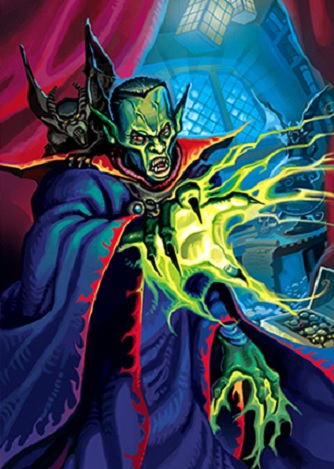 |
| How does he write battle plans with all those animals in his library? |
Admittedly, Zagor's formative years don't make a good start for my case. Zagor became an apprentice to the unapologetically evil and chaotic Volgera Darkstorm along with two other obviously evil characters.
However, I'm sure that good teachers of magic are hard to find and that Zagor, as a gifted student did not want to squander his talent, so he picked the best teacher he could find. Accounts say that he and his friends used to terrorise nomads.
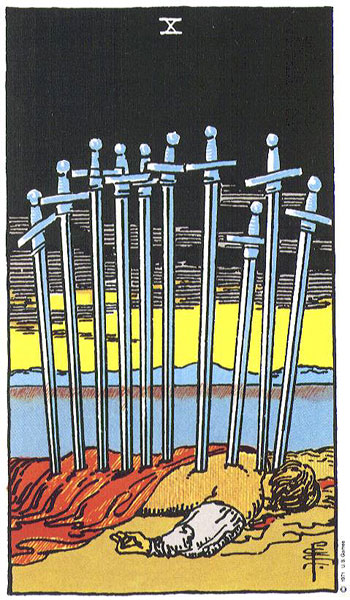 |
| How Volgera Darkstorm's life ended. Zagor seems to get a bad reputation for killing an evil wizard. |
However, this is a classic case of peer pressure and, desperate to fit in, Zagor had to go along with these sadistic jokes. However, he had the greater good in mind.
It is then stated that the 'Demonic Three' as they now became known, slew their master, looted his library and went their separate ways. Most people would put it down to their evil ways and the need for them to usurp their master, but although this might be true for Balthus Dire and Zharradan Marr, Zagor did this in order to rid the world of a powerful evil sorcerer. A clever strategist, he planted the seeds of dissent in his co-pupils' minds in order to turn evil upon evil. It also shows that Zagor was obviously the cleverest of the three.
However, despite being a formidable and driven sorcerer his early associations and practice of magic gave Zagor a bad reputation with pretty much everyone.
Zagor's home
 |
| Some monument, as seen in my dreams. |
The 'official' story states that Zagor led an army of chaotics and undead to wipe out the dwarves in Firetop Mountain and took their treasure. Sounds bad, but I bet that's not the whole story. I think that behind this story is the story of how Zagor discovered just how judgemental these 'good' types are.
Here is what really happened.
 |
| Zagor is an enthusiastic protector of Allansia's heratige sites. |
Wanting to do some sightseeing, Zagor headed to Firetop Mountain, asking the dwarves if he could lend them a hand. After seeing a demonstration of his magic, Zgor earned the dwarves' immediate distrust and inspired a great level of hostility in them. A confused and hurt Zagor was chased out of the mountain by an army of angry dwarves.
The dwarves once again refused since they were a snobbish and elitist lot, so Zagor set his friends on them. After a long and bloody battle, Zagor decided that he would remain in Firetop Mountain to protect it and make sure that all could visit it.
Firetop Mountain, which although looks a bit strange, is certainly not an evil place. The red on the top of the mountain is not due to anything sinister or destructive like a volcano but rather it is due to some lovely flowers. How many evil sorcerers do you know of whose criteria for a base of operations include a lovely range of flora? I know of none.
 |
| He doesn't want you harming the wildlife. |
These flowers, as well as being sleep inducing are also an integral part of the ritual that cures one of a powerful death spell, which afflicted Nicodemus and the hero of Caverns of the Snow witch. If Zagor was such an evil person, surely he would have got rid of the flowers once he had realised that one of Allansia's greatest forces for good had cheated death on the top of his mountain? No - he let a vampire slaying hero become cured of the same affliction. Thanks for protecting the mountain, Zagor.
 |
| It's just a hobby. |
Now the fact that he uses orcs instead of humans may make some people think that he's evil, but which superstisious uneducated soldiers are going to work in a freaky mountain for a sorcerer? I bet magic has a bad reputation in the area as well. It seems that orcs, however, are far more accepting of activities which veer from the mainstream.
 |
| If they're both enjoying it in the privacy of their own home then who are you to judge? |
Zagor also has a few nice characters in his mountain such as the dwarves and the old shopkeeper who are a bit tired of all of these chaotic types, but maybe they see tham as a necessary evil as they don't go out and kill them all. They don't want the bad old days where a bunch of snobbish dwarves kept out all visitors.
 |
| No, old man, I don't know about the Long Dark Night because I don't live in a place where there's hundreds of metres of solid rock between myself and the Sun. |
What about the hero's motive? Are the villagers worried that Zagor is about to do something nasty to them? No. Does the hero want to do some sightseeing? No. I doubt the hero is even a member of the National Trust. The 'hero's' motive is pure greed. In the end, Zagor does get slain by a greedy adventurer who takes his treasure and then may or may not use Zagor's spellbook to rule over Firetop Mountain and maybe do a whole lot a crazy stuff.
After all, this sword swinging thief probably has less ability to handle all the powerful magic in the book. Who is to say that they do not get corrupted by the power and try something nefarious? Even sorcery for the cause of good is dangerous and shouldn't be used by the wrong people. Zagor obviously had the inner strength to not go crazy with it, but most people don't. Maybe its best that Zagor was in charge of the book.
However, if this adventurer does use the book, then they get their comeuppance a decade later when Zagor returns to claim what is rightfully his and may even save the area from this lunatic.
I mean, how would you feel if someone broke into your house and started trashing it and the area where you live?
 |
| Now you've annoyed him. |
Sure it says in the background that casting a spell on yourself so you come back from the dead makes you evil but maybe that's superstitious peasants again. Or maybe this book is written by the adventurer who slew him the first time and later got ejected from Firetop Mountain by the powerful sorcerer when he returned to claim what was rightfully his.
And you can explain all of Zagor's behaviour (getting body parts, wanting to take over Allansia) as being hacked off (no pun intended) about being killed for no reason the first time. After all, if hordes of fortune seekers kept marching into my home to kill me and take my treasure, I would give my right arm (once again, no pun intended) to take every precaution to stop it happening.
Maybe he wanted to take over Allansia because he thought that sorcerers were getting a bad reputation and wanted to build more schools for sorcery and educate the young Allansians to show its useful side too. Or maybe he just wanted to purge it of treasure seeking rascals.
However, once again, he is slain by another treasure seeking rascal, this time with the blessing of Yaztromo and the citizens of Kaad. However, thankfully, the 'hero' or Yaztromo can do nothing about Zagor's resurrection magic.
However, once again, he is slain by another treasure seeking rascal, this time with the blessing of Yaztromo and the citizens of Kaad. However, thankfully, the 'hero' or Yaztromo can do nothing about Zagor's resurrection magic.
Then we get to Legend of Zagor - now Zagor wants to take over the world of Amarilla. Or does he?
 |
| Zagor before... |
He managed to get there when the Bone Demon was banished from that world. Maybe he saw the portal as an opportunity to go to a more accepting world instead of a place where people kill him every ten years.
 |
| and after. He's obviously had a change for the worse. He's not looking after his fingernails for a start. |
Maybe that's what made Zagor so evil in Legend of Zagor. If it was just Zagor, then he would have just sat in Castle Argent like he did in Firetop Mountain.
In the book, Zagor performs a heroic sacrifice. He has been fused with an evil demon who wants to destroy the world, but he does small things to help the hero. The crystal ball that Yaztromo uses gets destroyed, but maybe Zagor was buying time by distracting the demon. If it wasn't for him, Yaztromo may not have been able to get through at all. Yaztromo sends gold talismans and silver daggers. Maybe when Zagor was in the portal and he could feel himself being fused with the demon, he kept it open for a bit longer so that the talismans and daggers could get through.
And when you are carrying the demon to the Heartfires, maybe Zagor is struggling to keep the demon unconscious so that you can complete your task, even though he knows that he will be destroyed in the process.
 |
| Zagor isn't actually in two of these books because he's not the real villain - the demon is. |
I know he gets very angry because he is being faced by a 'wretch like you.', but of course he's angry. Having his hobbies interrupted by being slain by some sword wielding vagabond is the story or Zagor's life. It's already happened twice. Now he's sharing his soul with a demon and although he knows he has to sacrifice himself to destroy this demon, he is bitter that the person who will slay the demon is not so different from the rogues who killed him before.
Zagor has put all this work into being a powerful sorcerer. All he wants is to face someone of legendary reputation. He must feel very insulted that the people selected to slay him are basically bums of the street. He must feel that no one respects him enough to send someone with a good reputation to slay him. Or at least an army.
Zagor was also in the Trolltooth Wars, where, once again, he was not trying to do anything malevolent. In fact, he helps Darkmane to stop Marr from taking over Allansia. Sure he's not too welcoming at first, but Darkmane and his gang have killed a few of his servants and Mantrapper tried to kill him straight away (but I'm not revealing why - read the book).
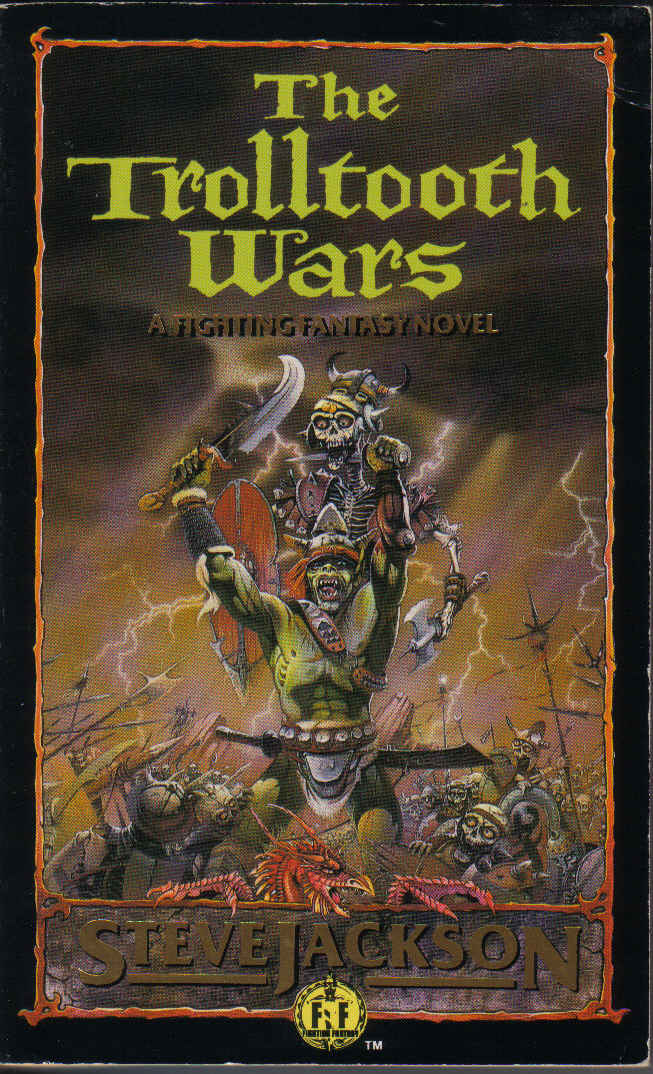 |
| Not a warlock in sight |
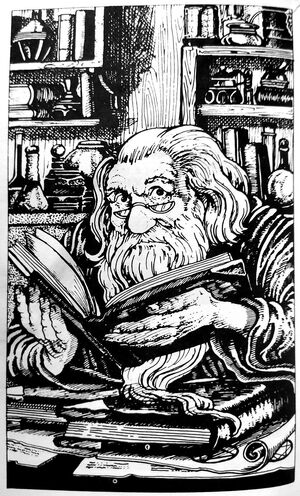 |
He's not going to teach you magic. He's tallying you bill. |
In fact, once they are all on the same page, Zagor is a very helpful a courteous host.
He does not demand any money for his services whereas the seemingly good Yaztromo takes 40 gold pieces for an enchanted dagger he gives to Darkmane, even though he is going to use it to save Allansia. What a greedy so and so.
So Zagor has helped to save Allansia once from his ex 'friends' who probably annoyed him with all their evil talk and the fact that they were giving him a bad name. He has protected a place that was used to save the lives of Nicodemus and the slayer of the Snow Witch and when he unfortunately became fused with an evil demon he weakened it so that someone could slay it.
So Zagor has killed an evil sorcerer, helped save the lives of two champions of good, helped save Allansia once and sacrificed himself in order to save the world of Amarilla. He has performed more heroic acts than most protagonists in Fighting Fantasy books.
Zagor has been widely misunderstood, partly because of peoples' distrust of sorcery and partly because he kept bad company when he was young (Balthus Dire and Zharradon Marr, who both tried something Malevolent in their gamebooks).
So Zagor has killed an evil sorcerer, helped save the lives of two champions of good, helped save Allansia once and sacrificed himself in order to save the world of Amarilla. He has performed more heroic acts than most protagonists in Fighting Fantasy books.
Zagor has been widely misunderstood, partly because of peoples' distrust of sorcery and partly because he kept bad company when he was young (Balthus Dire and Zharradon Marr, who both tried something Malevolent in their gamebooks).
Any hostile act he performed could be seen as justified anger at being socially excluded by dwarves, being constantly attacked by lowly fortune hunters or by being fused with an evil demon.
I think Zagor needs to be vindicated and be in a gamebook where he is allowed to let his true heroic colours show. How about a book when Zagor comes back from the dead to find that his slayer is forcing the creatures of Firetop Mountain to invade Allansia and only he can stop it as he knows the mountain better than anyone. However, even if he succeeds, he is still treated as the villain just because he's a sorcerer. Which then leads to Return to Firetop Mountain...
Poor Zagor's had a hard life. I suggest we start a 'Clear Zagor's Name' campaign where we put an end to his bad reputation.
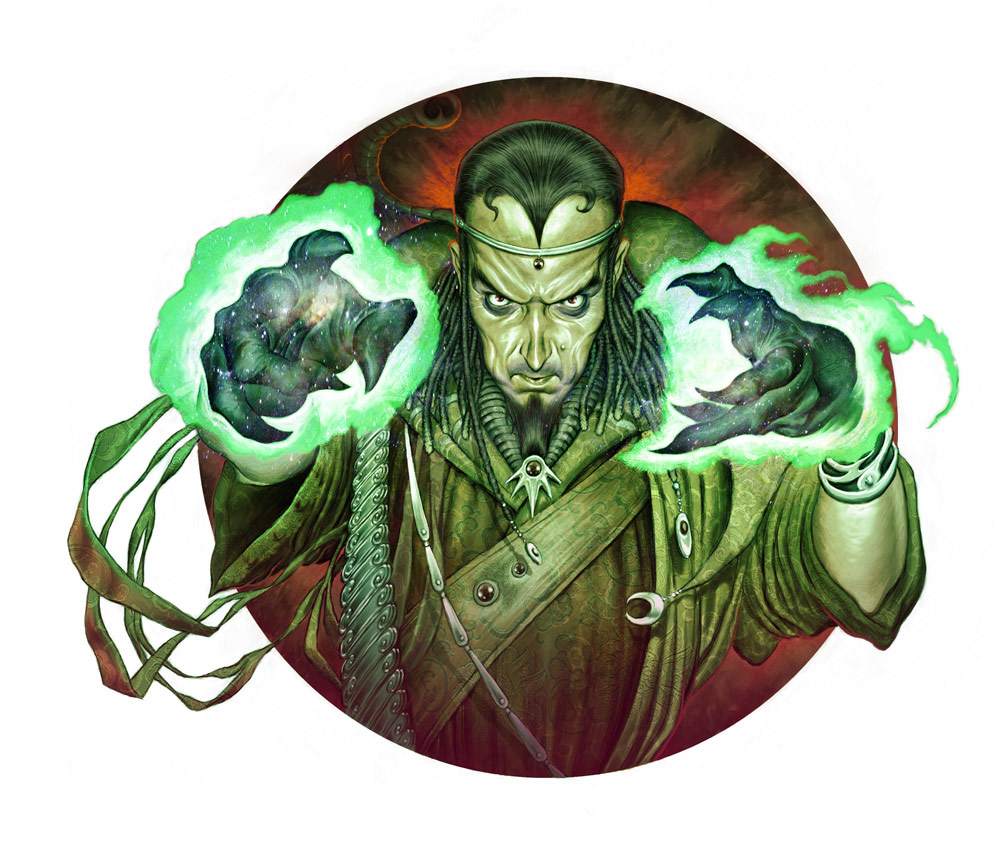 |
| He just wants a hug. |
Poor Zagor's had a hard life. I suggest we start a 'Clear Zagor's Name' campaign where we put an end to his bad reputation.

