Showing posts with label micro adventure. Show all posts

Saturday, February 26, 2011

What microadventures taught me - narrative is important

So now I'm more efficient with my paragraphs, but I still had a big problem with my early gamebooks. 

There was no narrative.

 Looking at my first adventure, War of Deities part 1, you will notice that most of the paragraphs are just descriptions of the room that you are in and the people in them.  This 400 paragraph book has 26000 words.

Moving over to my latest gamebook to date, Sharkbait's Revenge, we see that it is a 100 paragraph book with just under 22000 words.  And it has a shorter rules section.

When I started writing gamebooks, I just didn't write narrative.

And this orc is a 3rd level fighter
with a +1/+1 double sword and a
+2 amulet of natural armour. 
The way I originally approached writing gamebooks was the same as my approach the games - it was all about the numbers.  I didn't care what my sword looked like if it gave me a +2 bonus in combat.  I went for the 100 gold pieces and not the lovely description of the pile of treasure.  I was enjoying my experience immensely, but I just was not accessing the whole experience available to me.

 This was good at the time, but then when it came for me to write a gamebook, I completely missed those things out. 


I was too busy focusing on making the game system balanced.  I did not want impossible combats or instant deaths based on a die roll.  I think I did quite well (I hope), but my descriptions were scant and my characters were one dimensional.

This is the kind of feedback I got after my second entry to the Windhammer Prize for short gamebook fiction at Arborell when I entered City of the Dead.  The winner and the merit award prizes were more rules light and focused more on narrative.  Indeed, Kieran Coghlan's Waiting For the Light had nothing but an inventory list.  There wasn't even a background, but it is still great because of the narrative and the mystery of the book. 

I've just read Heart of Ice and there are some brilliant descriptions and characters in the book and this is why it is a contender for greatest gamebook of all time (don't we need a Fighting Fantazine type survey on this kind of thing already?)

A picture I took of the
Himalayan foothills.  I
would  think about how
to describe this lovely place.

So when I wrote microadventures, I fleshed them out with good descriptions of the area the hero was in.  I imagined the smells and the sights and how the hero might feel in that situation. 

An ancient Egytian scimitar.  Not just
another non descript method of dealing
2 stamina points of damage.

I went to museums and took pictures of artefacts that I could describe in my books.  I also made sure that all of my characters, even the bit part ones, had a defining characteristic.  I also thought of certain well known phrases or scenes which would give tons of information on the mood of the scene. 

For example, In my short book In the name of Love, I had a big 'NOOOOOOOOOOOOOOOOOO!' when the soldier's lover was shot with a crossbow (number of Os may vary with each big 'NOOOOOOOOOOOOOOO!')

I would also read about actual historical events to get a feel for what it was actually like to be in a setting that matched the time I was in.  A couple of examples include a forensic account of a battle bought to my attention on the Fabled Lands blog and a link to an article about how human skulls were used as drinking vessels at an H.P. Lovecraft blog.

I have found www.tvtropes.org to be an invaluable tool for things like this.  However, be warned - I also found it highly addictive.

I wanted everything to be memorable.  And it had to be if all our readers were looking at would be the rules, the background and about 10 paragraphs.

This is what I now do - Sometims I feel like I am going over the top by drawing on well known tropes and cliches.  I also feel like I am being less original, but then readers need something to connect to. 
I don't want to go that far, but I need to have a balance of having enough familiar material to pull the readers in with enough original material to make my book a unique and entertaining experience.
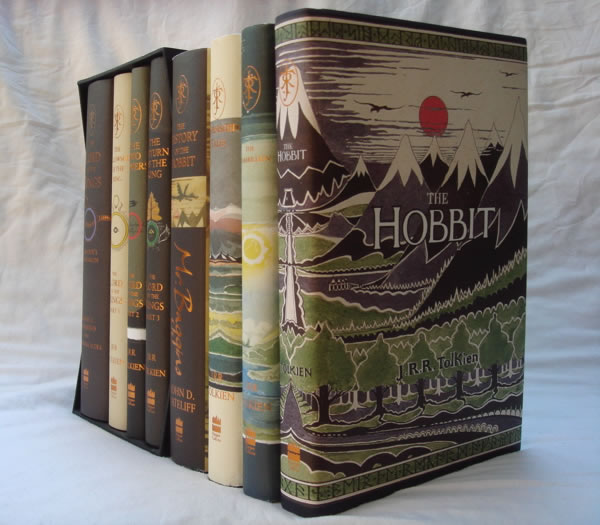
Can you have too much description?  What do you think, Tolkien?
However, it seems that there can be too much description for some people.  I realised this from the comments on this post in Fantasy Gamebook that minimal description allows people to create their own narrative about their character. 

So then it goes down to how much is too much?  What should be in the book and what should be left for the reader to fill in?  Is there just one answer to this question? 

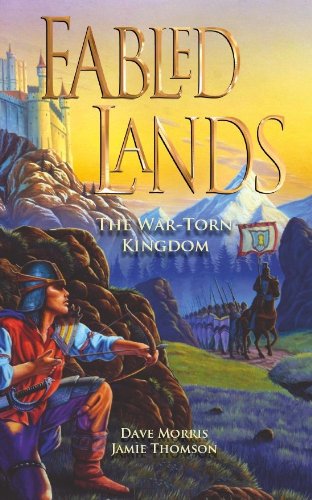
Next time, I'll be writing about the Fabled Lands setting in a lead up to my review of The War Torn Kingdom. 

Whoops - my finger slipped 

He's not a villain.  He's
more 'armless than most.

Get back in the book, Zagor.
It's not time yet.
You may have seen an article entitled 'Zagor - misunderstood hero?' in your feeds that has no link.  This is a future article that I intend to publish after I have written about Fabled Lands.  I was adding an image to the post and accidently hit publish rather than save.  I apologise for that.At the moment, my review of Fabled Lands is over four posts, so this article will be released in April.  That's something to look forward to. 
Speaking of accidental publishing, Murray will be publishing a playthrough of City of Thieves on his highly amusing Turn to 400 blog.  Keep an eye out for that.  

Lots to look forward to.  Have fun! 

Wednesday, February 23, 2011

What microadventures taught me - don't be a waste of space - addendum

I've just thought of a few other ways of creating an intresting and immersive gamebook which challenges the player even if it is over a small number of paragraphs.  This is by turning random choices into decisions.

Most gamebooks have some ultimate aim in order for you to win (Fabled Lands is an exception.  You decide what your criteria for success are and there is no 'winning' end).

However, most of the time, you have no idea on how to achieve that aim and you do not receive any direction from the book.  It becomes a matter of random choices or trial and error.  And if your success or failure depends on random trial and error then losing is going to feel very grating.   

For example, in Temple of Terror, you are given the opportunity at the beginning of paying for passage on a barge to Port Blacksand or travelling by foot.  If you go by foot, you've lost.  Really.  There's an item that you need in Port Blacksand that you need in order to trade it later on for a vital item.  How were you supposed to know that?  You weren't.  You just read through the whole book, not knowing that your were going to die towards the end because of something you did right at the beginning.  You didn't enjoy spending all that time losing?  Suck it up, princess.


Now drop and give me 399
'cos you aint good enough
to get to 400.

I was being a bit harsh there, and so was the book.  So how can you turn seemingly random choices like that into informed decisions that stretch your abilities so that at least if you do win or lose, the responsibility is yours alone.  Victory will be sweeter because it was you who did it.

So how can we turn these seemingly random choices into informed decisions?

Maps

It comes in handy but
having a maze with a
map of it at the entrance
kind of defeats the point of it.
All those arbitrary decisions of 'East or west?' can be made less arbitrary if you have a map at the beginning of the book.  That way, you have some idea about where you need to go.  Want to go to a village?  Go south.  Want to go to a castle?  Go west.  It is also useful in Spectral Stalkers. 

Too many dungeon crawls have similar corridors and identical doors which give no indication of whether you will be successful by taking them.  In its most frustrating form, taking random doors can lead to sudden death paragraphs.  Not very enjoyable.

Of course you don't know exactly what will happen at the locations on the map, but having a map makes the decisions less random and of course, going to random places is fine if the success of the hero does not depend on it.


Have puzzles

This is the game from Curse of the Mummy. 
What's the winning move?
Having a puzzle on a paragraph means that you have to make a series of decisions on what the solution is.  This gets a lot of milage out of one paragraph. 

However, I have come across puzzles where I have had to work out the number of a paragraph, hit a brick wall and got very frustrated about it (I'm looking at you, Tower of Destruction)! 

To make it easier, it could be a multiple choice puzzle or, if it does involve finding out which paragraph to turn to, make the solution paragraph obvious so that I can flick through the book and work out where it is. 

The devil is in the detail
Either he's an imposter or he's still
bitter about that time you put dog
poo in his lunch.

Some choices that may seem random are not actually random if you look at the details in the text or in the illustrations.  For example in Siege of Sardath, you come across Sorrel, one of your best friends.  He taught you archery, tracking and how to respect the forest and you taught him swordplay (bit of a bum deal for him if you ask me) and the text tells you that he has a scar on his right eye as a testament to this (I've never scarred my right eye as a testament to my friendship with someone.  Obviously, I'm not a good friend). 

The illustration opposite goes with the paragraph.  Notice anything out of place?

Another example is in Andrew Wrights microadventure, Debacle at Dead Mans' Inn.  At the end of the book, you have to decide which of the villagers is a shape shifter.  You are given a brief description of each villager.  All I'm going to say is that you need to read the descriptions of the villagers before you see them then.


So there are some more ways on getting more milage out of gamebook paragraphs.  A lot of the above ideas will be needed to make micro adventures more substantial but they will also work for longer adventures too and this means that there will be more space for plot and more encounters.

If you have any other ways of making a short adventure more substantial, please post it in the comments box. 

Blog updates
I am really getting sucked into this blogging thing.  I have several posts written and ready to post, but I need to slow down.  I'm finding it very easy to just spend all of my time surfing the blogosphere and writing posts about gamebooks.  I'm loving it and I'm getting a lot out of it, but there is one small problem.
I'm not writing any gamebooks.
I need to make time to actually write some gamebooks, so I'm going to limit this blog to one post a week.  I aim to post on a Sunday morning (GMT) from now on.  My next post will be about narrative in microadventures and then I will be writing about Fabled Lands.  And then I will also write some more gamebooks.  The posts will be less frequent but they will be more regular. 
Thankyou all for all of your attention so far!  Please keep in touch and tell your friends about this blog! 
Have a lovely day.


Monday, February 21, 2011

What microadventures taught me - don't be a waste of space

Mark Rosewater (also known as MaRo).
First of all, I recommend you read this article and this article by Mark Rosewater, head designer of Magic the Gathering.  It is a useful guide on how to improve your creativity and is a great read, even if you know nothing about Magic the Gathering.  As I have said before, I will post a list of articles that Mark Rosewater has written on creativity and game design as many of his ideas are pertinent for gamebooks. 

Read those articles?  They're good, aren't they?  So why were they pertinent to gamebooks and microadventures?

It all goes back to Mark's view on restrictions.  Restrictions breed creativity.  And microadventures confirmed this.

I had just completed Shadowcaster part 1, a 533 paragraph abomination chock full of every idea I could fit in to the book and I couldn't carry on with the other two books.  I had made it too big and I could no longer be bothered to carry on with the Shadowcaster trilogy.

So I was sitting around, not too motivated to do anything gamebook related, when I downloaded the Fighting Fantasy official magazine (is it still going btw?).  In the magazine was a 25 paragraph adventure by Andrew Wright called 'In the Shade of the Pango Tree.'.  The paragraphs filled one page of A4 which they shared with a large illustration in the middle of the page.  I had a brainwave - writing one of these little pieces would be quick, simple and allow me to flex my creative muscles.  Andrew wrote two more of these adventures - Debacle at Dead Man's Inn and Into the Valley of Halos.  They can be found in this Yahoo Group. 

So I ended up writing ten microadventures.  However, the restriction of having only 25 or 50 paragraphs to use, made me call upon my creativity in order to squeeze more in to the adventure. 

The problem with having so few paragraphs is that the player will only have a few decisions before the adventure is over or they will havea very linear adventure.  It is a problem that the small Choose Your Own Adventure books had, as mentioned in this article.  The book would also not be very variable and its replayability factor would be very small.

However, there are several solutions to the problems which mean that you can pack a good storyline into a small 25 paragraph adventure.

Here they are:

1)  If there is an ability roll and the outcomes of success and/or failure are obvious then you do not need to turn to a new paragraph to read the outcome.

In most Fighting Fantasy books, when you test your luck, you usually have to turn to a new paragraph if you are lucky or another new paragraph if you are unlucky.  That's two new paragraphs for every test for luck, which is 8% of a 25 paragraph book.

However, if, for example, you have to test your luck to see if an arrow that someone firs hits you, then it will come as no surprise that if you are lucky, the arrow misses and if you are unlucky then the arrow hits you and you lose stamina.  This does not warrant two new paragraphs.  Just leave it one the current paragraph.

Also, if you have an ability roll and the result of one of the rolls is that nothing happens, then you only need to turn to a new paragraph for the result that involves something happening. 

For example, if you have to test your luck to see if you notice a secret door, then you can write 'Test your luck.  If you are lucky, turn to 11.  If you are unlucky, you carry on down to corridor until...'

This also applies to random die rolls to see if an event happens.  Fabled Lands is full of these and if you had to turn to a new paragraph for every random event that happens to you, then the books would have an extra 30 or so paragraphs.  These random events die rolls will also add variability to the book.  An example from The War Torn Kingdom:


Roll 1 or 2 A thief steals one item from you (your choice).
Roll 3 or 4 Nothing happens.
Roll 5 or 6 Find a manbeast's helmet.


The paragraph then  gives you a decision to make.  That is efficiency with paragraphs. 

2)  If you offer a decision with several options, then one of the options could involve staying on the paragraph.

For example, instead of writing 'To go north turn to 4.  To go south, turn to 8.', you could write 'If you wish to go north, turn to 4.  If you wish to go south, you follow the path...'.

This reduces the number of paragraphs you need to use by 1, which is 4% of a 25 paragraph gamebook.

3)  Have items that can be used independently of where the player is in the book

'Sure, the storm drake looks tough, but not after I've shot him with my blunderbuss and cut him a few times with my good old anti dragon magic sword.  And if it tries something, it has to get past my breastplate and my wyrmskin cloak.'

Stormslayer, Jonathan Green.

Since you have only 25 paragraphs, you can't write it like a Livingstone adventure where any old piece of junk gets a paragraph dedicated to how it manages to help you save the world (for example - a small wooden brick gets you access to a shop or certain villains are scared of a monkey or some powerful sorceress requires you to have small metal discs or certain shapes.). 

However, you can still have plenty of items which do not require a new paragraph every time you use them.

i)  Items that you can use to restore stamina at any paragraph except for one where you have a combat, such as provisions or potions of healing.

ii) Items that you can use when you are in combat such as a throwing dagger that you can use before the combat begins or a piece of armour that reduces damage on a die roll.

iii) Items that has an effect when certain events happen to you such as a fur cloak that allows you to ignore any damage from cold or a climbing kit that allows you to make climbing rolls easier.

These items can also offer more choices.  For example, the throwing dagger you use in combat may get lost when you use it so you have to decide whether you use it for the combat you are in or whether you should save it for later. 

3)  Have an encumbrance limit.

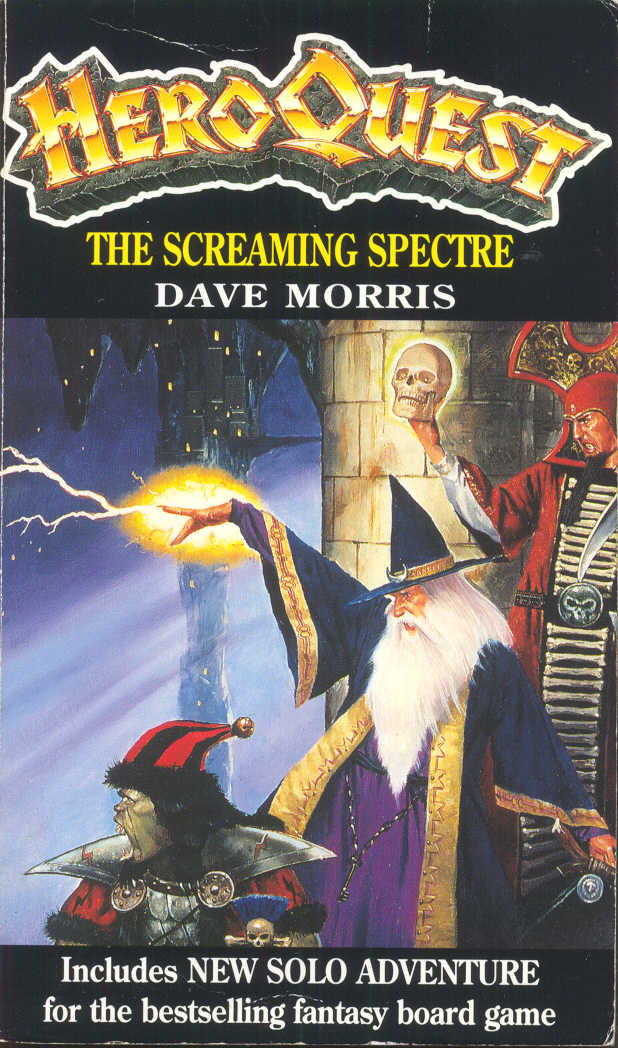
'Oooh, that's good.  I can get some spider silk.  Hang on.  I've got a dagger,
a talisman, the lucky bottle and a carpet.  What should I get rid of?!'

The Screaming Spectre, Dave Morris.

If you have a limit to the number of items you can carry, then every time you find a new item, you have a decision.  Is this going to be useful enough for me to use a slot on this?  I'm already full - is this item going to be more important than anything else I'm carrying?  Do I know how useful any of my current items are? 

4)  Go shopping

'I could by the boots of stealth and make use of the move
silently skill, but then I won't be able to afford a sword!'

Master of Chaos, Keith Martin

There's nothing that gives someone lots of decisions to make like a list of useful items with a price tag. 

The combinations become very large very quickly, expecially if you factor in an encumbrance limit and if you make sure that the player will not have enough money to buy everything. 

Having a list of things to buy may also affect other decisions a player makes.  If you give them an option of trying to get more money by doing something risky, then they need to decide if they can afford to buy what they need or if they need to take the risk to get more money and therefore more items. 


They're all very nice, but I really need
something that can take out a
mad sorcerer.

Or maybe they should save their money because it may come in handy later.  Or maybe they could sell something. 

You can put all of these decisions on one paragraph just by having a shop in your adventure.


5)  Give the player decisions in combat rather than just make it a die rolling exercise

'Should I thunderbolt this guy or cast fast hands?'

Legend of Zagor, Ian Livingstone.

Most combat systems use the idea of rounds.  If your character has different modes of attack, such as a choice of spells or the decision to attack in an aggressive manner or defensive manner, then each round becomes a decision. 


6)  Allow the character to be customised

'I'll definately need climbing, but should I go for disguise or combat?'

Moonrunner, Stephen Hand

You can give the player decisions to make before the game begins.  They can customise their character in several ways.

i)  Give them a choice of characters (Fabled Lands, The Fellowhip of Four, Duelmaster books or Legend of Zagor)

ii)  Give the player points to adjust their character's abilities (Night Dragon)

iii)  Give the player skills and/or spells to choose from (Lone Wolf, Citidel of Chaos, Moonrunner)

iv)  Give the player a choice of equipment and/or a shop to buy equipment from (Lone Wolf, Space Assassin)

7)  Give the player a choice of paragraphs in the background.

So instead of giving players the background and telling them to turn to 1, give them a choice.  This gives you one extra paragraph to play with. 
So there we are.  In my free download, Ten Short Fighting Fantasy Books and One Long One, you will be able to see me utilise all of these ideas in my micro adventures.  I would recommend anyone to do some - they are fun and quick.  If you do write one, I'd love to read them. 

Next time, I'll write about what micro adventures taught me in terms of narrative.

Until then...have fun!


NUEV3ZS5YBZR


Wednesday, February 16, 2011

What microadventures taught me. Prologue - the circumstances that led me to write micro adventures

This is the story of how I wrote ten micro adventures and how they made my writing a lot better. 

Tiny little Fighting Fantasy.

For me, a microadventure has 100 of fewer paragraphs.  I have written gamebooks as small as 25 paragraphs long. 
You can find microadventures (and many other, longer Fighting Fantasy books) from the following links:
So it’s September 2007 and I’ve completed one Fighting Fantasy Gamebook of my own, War of Deities part 1.  It’s the first gamebook I’ve completed (I’ll write about my unsuccessful attempts in a future post) and I’m looking over it for errors after keeping it hidden away for two months.  I wrote and randomised the paragraphs in two days in the summer and then I hid it away. 
I had decided to go easy on myself – the book was a basic dungeon crawl with random and not too logical encounters culminating with a battle against a mad wizard.  The only twist was that you were trying to get some priceless artefact back and that someone else was also trying to get it. 
I included this because I wanted to make it a four part gamebook series, so naturally, inspired by re reading my opening gamebook and having written several notes on the other three, I started a completely different Fighting Fantasy book.
It’s not logical, I know.  One of my problems is that I have too many ideas and that I need to stay disciplined enough to focus on one of them or I won’t get anything done.  I’ve learnt that now (I will  write about why complete disasters are so good in a future post).
Enter Shadowcaster, part 1 (I intended this to be part of a trilogy).  It is nothing to do with the 1993 game of the same name. In this Fighting Fantasy gamebook, the hero is a wizard with a choice of magical skills and an extra ability score called morality.   
However, I wanted to be clever.  Morality was a measure of your philosophical outlook.  A low morality score meant that people weaker than you should sacrificed for your good.  A high morality meant that you should serve a higher cause to the extent that you would give up your life for it.  There was a narrow happy mean where you had not been influenced too strongly by these philosophies and had quite a balanced outlook on life.
Light, darkness or shadow?

I did not want to use the words ‘good’ or ‘evil’ as I did not want to put such slippery and connotation laden words into this book.  Instead I used the words light, darkness and shadow to describe the followers of such philosophies.  Those  with high moralities would follow the ‘light’ side and be your classic shining knights, pious priests and proud soldiers.  Except most of the time, they were fascists.
For you Magic the Gathering fans out there, I got this idea from Mark Rosewater's article, The Great White Way.  I will be mentioning more of Mark Rosewater's articles on design in future blog posts.
The side of darkness was your classic undead, orcs, monsters and necromancers.  They wanted pretty much what most ‘evil sorcerers’ wanted – world domination and the death of their enemies. 
The side of shadow consisted of a small band of sorcerers and other followers who wanted to utilise the powers of light and darkness without ascribing to their extreme philosophies.  However, it was a narrow path to walk.
Your actions would determine your morality.  I did not want your morality to determine your actions but it would determine how  other factions reacted to you and whether you could use certain artefacts.
Got that?  That’s not all...

Which magic will you use? Which path will you walk?

As a wizard, you could choose certain magical skills.  However, you didn’t just choose any old skills, you had to choose skills from the side of light, darkness and shadow.  You are a shadowcaster, a wizard that wants to use the magical abilities of the sides of light, darkness and shadow. 
Got that?  That’s not all...
Powers of light increased your morality.  Powers of darkness decreased your morality.  If your morality went too high, you couldn’t use your darkness or shadow powers.  If it went too low, you couldn’t use your light or shadow powers.  So it was important not to overuse those abilities.  You could use more powerful spells of light and darkness but they would increase or decrease your morality by more. 
Got that?
Don't go too far either way.
Add a bit of moralising about how being too extreme is the worst possible option.
Got that? Good.  Now we can get on with the story.

 
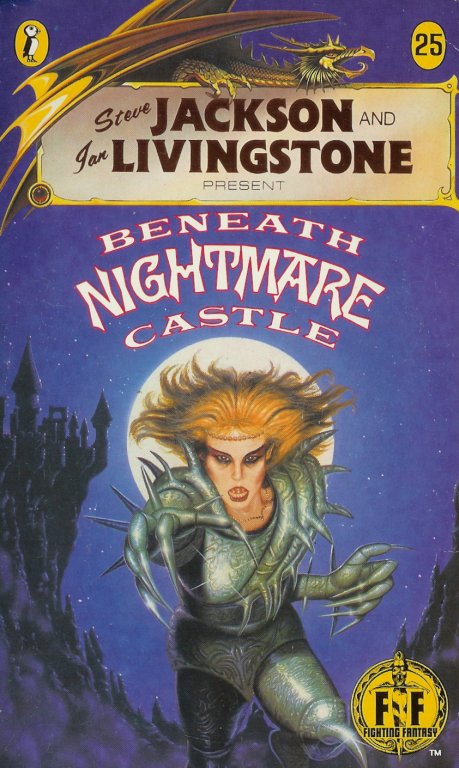
It’s a three part prequel to Beneath Nightmare Castle, so it includes characters from that book and also includes elements from Portal of Evil. 
Got that?
That’s about it, really.  I managed to finish the whole 533 behemoth and then I emailed it to ffproject to be put on the downloads page. 
However, my book was buggy and I had to fix some references.  I was a bit disappointed with the reception to it.
 Where did it all go wrong?
I was jumping around with my ideas and not focusing on one.    I agree with Sidney Smiles when he says ‘The shortest way to do many things is to do one thing at a time.’  I should have finished War of Deities before compiling some other epic.

Too many.
There were too many ideas in the book.  I went from a simple dungeon craw in the standard 400 paragraphs to a 533 paragraph cross country epic which included a morality score, skills, an over arching philosophy and references to canon Fighting Fantasy books.  I was juggling so many balls, I was bound to drop at least one.  The major one was my paragraphs and my atmosphere. 
The atmosphere of the book did not fit in with the atmosphere of Beneath Nightmare Castle. 
My book had nothing like this picture.  Neither did Beneath Nightmare Castle because this picture was banned.

I love Lovecraft.  I knew this before I knew who Lovecraft was or what it meant to be Lovecraftian.  That is why I like Beneath Nightmare Castle.  However, I was not familiar with its inspiration and so did not include any original Lovecraftian elements.  Instead, my characters are too generic – black robed wizards, zombies, elves and knights.  Next time, if I write a prequel, I will fit it in with the atmosphere of the original book.
I was being too ambitious and now I have two unfinished gamebook sagas instead of one.  Great.  I also put so much effort into Shadowcaster part 1 that I burnt myself out and did not want to write any more gamebooks.  Both of my projects have been shelved to this day. 

However, microadventures brought me out of my state of despondency...